

Key Takeaways
- Nearly 50% of new Indian SMEs do not survive five years, over 75,000 MSMEs shut down between 2020 and 2025.
- Buying an existing business gives you cash flow, customers, and a trained team from Day 1, skipping the 18–36 month break-even valley.
- India’s M&A market hit US$123.8 billion in 2025, up 18% from 2024, mid-sized SME deals are accelerating.
- The 2025 Union Budget introduced an 8-year loss carry-forward for MSME acquisitions, a direct tax incentive for buyers.3
- On IndiaBizForSale, the most active deal range is ₹50 lakhs to ₹50 crore, with simple deals closing in as little as 25 days.
There is a version of the entrepreneurship story that goes like this:
You have an idea. You write a business plan. You raise money, hire people, build a product, find customers, and five years later, if you survive, you have a real business.
This story is romantic. It is also, for most people in India, a slow and expensive way to fail.
In 2026, there is a different story worth considering. It is less dramatic. Nobody makes a Shark Tank episode about it. But it works.
You find a business that is already running and listed for sale. Already profitable. With customers who already pay, employees who already show up, and suppliers who already deliver. You buy it. You run it. You grow it.
This is not a compromise. For many Indian entrepreneurs right now — professionals with capital, mid-career individuals who want to own their income, or investors seeking operational involvement, this is the smarter choice. Let us look at the actual math.
- 90% Global startup failure rate
- 18% First-time founder success rate
- 75,000+ MSMEs closed in India 2020–2025
- $124B India M&A deal value in 2025
What Building From Zero Actually Costs
When most people think about starting a business, they imagine the exciting parts; the name, the logo, the launch day. They underestimate everything that comes before the first rupee arrives.
Registration, legal fees, office setup, equipment, initial inventory, your first hire, GST compliance costs, six months of salaries before revenue stabilises, and your own salary, which you are not paying yourself because there is no money yet. A modest small business in India today requires a minimum of ₹1 lakh to ₹5 lakh just to get operational, before a single paying customer.
Then comes the harder part: time. The average new business in India does not break even for 18 to 36 months. During that window, you are spending capital on a business that has not yet earned its keep, while learning how to run it at the same time.
The data is not encouraging:
- Globally, around 90% of startups fail
- First-time founders succeed at a rate of just 18%
- Nearly half of all new small businesses do not survive five years
- In India, over 75,000 MSMEs shut down between 2020 and 2025, closures nearly doubled year-on-year, from 19,828 in FY2023-24 to 35,567 in FY2024-25
- 82% of small business failures are caused by cash flow problems, a risk that begins on Day 1 of any new venture
These were not bad entrepreneurs. Many were talented, hardworking, and serious. They simply started from zero in a market that does not forgive zero very often.
What Buying a Business Actually Gives You
When you buy an existing business, you are not buying assets. You are buying compressed time.
You skip the 18-month valley of no revenue. You skip finding your first 50 customers. You skip the trial-and-error of discovering which supplier disappears mid-order. On Day 1 after an acquisition, you already have:
Cash flow that is already moving. The business generates revenue. Customers are already paying. Research shows 82% of business failures are caused by cash flow problems, and when you buy an existing business, that particular threat is already resolved.
A team that knows what it is doing. You inherit trained employees who understand the operations and the customers. No six months of interviews followed by six months of training.
Proof that the market exists. The single most common reason new businesses fail is that nobody wanted what they were selling. An existing profitable business has already answered that question, the demand is real and documented.
Bank and NBFC financing. Lenders in India are reluctant to finance startups with no track record. They are far more willing to finance a business acquisition because there is a history of cash flows to evaluate. A funding lever that does not exist for a new venture.
Supplier relationships already in place. Years of negotiated terms, trusted contacts, and reliable supply chains come with the business. You continue them. you do not build them from zero.
Licences, registrations, and regulatory standing. GST registration, trade licences, FSSAI clearances, and sector-specific approvals transfer with the business. For new ventures, obtaining these is slow, uncertain, and often a blocking issue in the early months.
“Buying an existing business is not the safe route. It is the faster route. The risk is different — not absent. But the starting position is fundamentally better than starting from zero.”
IndiaBizForSale Platform Data – 1,000+ Closed Deals
- The most active acquisition range on the platform: ₹50 lakhs to ₹50 crore
- Deal timelines vary significantly from as little as 25 days to 2.5 years, depending on complexity, due diligence findings, and how prepared both sides are
- The most common seller reason for listing: retirement, succession planning, moving abroad, focusing on a core business, or a personal exit and not business distress.
- Buyers who engaged a consultant or M&A advisor consistently closed deals faster and at better terms than solo buyers
- Most active sectors on the platform: manufacturing, healthcare & pharma, food & beverage, IT services, and retail
Side-by-Side: The Full Comparison
Here is what the two paths actually look like when measured against the same criteria — using real data from the Indian SME market in 2026:
| Factor | Starting a New Business | Buying an Existing Business |
|---|---|---|
| Time to first revenue | 3-18 months | Day 1 |
| Break-even timeline | 18-36 months typically | Already at or past break-even |
| 5-year survival rate | ~50% (18% for first-timers) | Significantly higher with due diligence |
| Customer base | Zero – build from scratch | Inherited from Day 1 |
| Team & operations | Hire, train, build systems | Trained team already in place |
| Bank / NBFC financing | Difficult – no track record | Easier – cash flow history available |
| Proof of market demand | Unproven hypothesis | Proven – customers already pay |
| Supplier relationships | Negotiate everything from zero | Existing contracts inherited |
| Licences & registrations | Apply, wait, uncertain timelines | Transferred with the business |
| Upfront capital required | Lower initial outlay | Higher purchase price (offset by financing) |
| Creative control | Complete – build your vision | Inherit existing model, then evolve |
| Tax benefit (2025 Budget) | Standard tax treatment | 8-year loss carry-forward for MSME acquisitions3 |
| Deal timeline | 6–18 months to operational stage | 25 days to 2.5 years depending on deal complexity |
Two Scenarios. Same ₹50 Lakhs. Very Different Outcomes.
Let us put two real scenarios side by side, based on what actually happens in the Indian SME market.
Scenario A: Starting Fresh
You have ₹50 lakhs. You start a manufacturing or services business.
Year 1 goes to setup, GST registration, equipment, compliance, hiring, and finding your first customers.
By month 18 you have spent ₹35-40 lakhs. Revenue is coming in but not enough to cover costs.
You are taking a reduced salary, or none. If you reach break-even by month 24, you are doing well. Many do not.
Scenario B: Buying an Existing Business
Same ₹50 lakhs. You use it, often combined with an acquisition loan to acquire an existing SME already generating revenue.
On Day 1, cash is flowing. You have a team. You have customers.
You spend Year 1 not surviving but improving; tightening margins, strengthening marketing, building on what already works.
By month 18, you have grown the business. Not just kept it alive.
The difference is not just financial. One path asks you to endure years of uncertainty before traction. The other gives you traction on Day 1, and then asks what you will do with it.
“If It’s Such a Good Deal – Why Is the Owner Selling?”
This is the first question every serious buyer asks. It is a fair question. And the answer is usually not what people fear.
In India’s SME market, most business sales happen for reasons that have nothing to do with the business being broken. A founder who built a manufacturing company over 25 years is now 62 and has no succession plan. A second-generation family member does not want to take over; they want to work in tech. A serial entrepreneur with three businesses wants to focus on two. A health issue forces a decision. A partnership splits.
Based on seller data on IndiaBizForSale, the most common reasons for listing are retirement, succession planning, and personal exit situations; not business distress. These are personal exits, not red flags.
Of course, some businesses do sell because they are struggling — which is exactly why due diligence exists, and why working with a verified platform and experienced advisors matters. The point is simply this: “why is the owner selling?” deserves an actual answer, not a fearful assumption.
The Indian M&A Market in 2025–2026: What the Data Says
India’s M&A market reached US$123.8 billion in total deal value in 2025 — an 18% increase from US$106.3 billion in 2024. The message from investors was clear: they became more selective, not less active. Mid-sized SME transactions gained momentum as large-deal volumes declined.
Several recent regulatory changes make this environment more favourable for SME buyers than ever:
- The Competition Commission of India (CCI) eased approvals for deals under ₹2,000 crore, reducing delays for SME acquisitions
- The 2025 Union Budget introduced an 8-year carry-forward of losses for MSME acquisitions, a direct tax incentive
- The fast-track merger process now allows quicker completions for small company transactions by removing NCLT approval requirements in many cases
- India had 6.19 crore registered MSMEs as of March 2025, and a growing number of owners are actively looking for successors
The supply of genuine, profitable acquisition opportunities is real and expanding. Buyers who recognise this now will have the widest choice and the best valuations. You can explore why more professionals are choosing to buy rather than build in 2026.
How to Find the Right Business to Buy in India
This is the question most buyers have after deciding to acquire. Here are the four most effective channels in the Indian market today, and what each one gives you.
Verified Online Platforms
Platforms like IndiaBizForSale carry 15,000+ active listings across 200+ industries and 1,300+ locations; verified and displayed on a no-name basis to protect seller confidentiality. Filter by city, industry, deal size, and transaction type. For a detailed walkthrough, read our guide on how to find businesses for sale in India.
M&A Advisors and SEBI-Registered Investment Bankers
For deals above ₹5 crore, an experienced M&A advisor brings three things that are hard to replicate: access to off-market deals, negotiation experience, and a filtering process that saves you from wasting time on bad listings. SEBI-registered investment bankers for larger transactions, CA-affiliated advisors for smaller ones.
CA and Legal Firms
CA firms quietly facilitate a significant number of business sales every year, particularly for clients who do not want to list publicly. Building a relationship with a reputable CA firm in your target city or sector surfaces off-market deals that no platform will ever list. If you are an advisor yourself, explore our partnership programme for investment bankers and CAs.
Industry Networks and Business Associations
Many of the best acquisition opportunities never get listed anywhere. They are known within an industry — the manufacturer ready to retire, the distributor whose children chose different careers. Being present in your target sector’s events, associations, and professional networks surfaces deals that platforms never will. Join our Business Buyers Club events to meet active sellers directly.
What Due Diligence Actually Looks Like for an Indian SME Acquisition
Buying a business without proper due diligence is how good buyers become cautionary tales. Here is what a serious review covers, before you sign anything. For sector-specific guidance, also read our post-M&A integration guide to understand what happens after the deal closes.
- 3 years of audited financial statements: P&L, balance sheet, and cash flow. Compare reported revenue against GST return data, discrepancies are an immediate red flag.
- GST return history (GSTR-1 and GSTR-3B): the single most reliable way to verify actual revenue in India. Match what the seller claims with what was reported to the government.
- Outstanding liabilities and loans: check for undisclosed bank loans, supplier payables, employee dues, and any pending legal disputes. Ask for an NOC from existing lenders.
- Customer concentration risk: if 60% of revenue comes from one customer, you are not buying a business. You are buying a dependency. Ask for a customer-wise revenue split.
- Key employee retention: are the people who make the business run committed to staying? What happens when the founder exits and takes relationships with them?
- Regulatory and license status: confirm all licenses are current, transferable, and not contingent on the outgoing owner’s personal standing.
Working with a CA and legal advisor during due diligence is not optional; it is the cost of doing this properly. The fee is a fraction of what a bad acquisition costs.
For manufacturing businesses specifically, Bhavin Bhagat recently shared a detailed breakdown of exit and acquisition considerations in our Manufacturing Business Exit Webinar Insights.
Five Questions to Know Which Path Is Right for You
1. How long can you sustain yourself with no income?
Starting may mean 12–30 months of minimal salary. Be honest about whether your personal finances support that runway without stress.
2. Do you have a proven idea or just a good one?
A good idea is not a proven idea. An existing profitable business is proof that customers pay, the model works, and the market is real.
3. Are you building for legacy or for returns?
If your goal is a business that generates reliable income and grows over 10 years, acquisition is typically the faster path to that outcome.
4. Can you access acquisition financing?
Banks and NBFCs will finance acquisitions against cash flow history. That option simply does not exist for a startup with no track record.
5. What is your actual timeline?
If you are 40 and want to be running a profitable business by 42, starting from scratch is a long bet. Buying is not.
Ready to Find Your Business?
The Honest Summary
Starting a business is hard. The odds are genuinely against you, especially in the first five years. This is not pessimism — it is data from over a million businesses across every market in the world.
Buying an existing business is not easier in every sense. Due diligence takes work. Negotiation takes skill. Integration takes patience. But the starting position is fundamentally different. You begin with proof, not hope. With customers, not a pitch deck. With cash flow, not a runway.
For Indian entrepreneurs in 2026 — professionals with capital, mid-career individuals looking to own their income, or investors who want operational involvement — the acquisition path deserves serious consideration. You can read about the most profitable business sectors in India right now to identify where the best acquisition opportunities currently lie.
Not because starting is wrong. But because the math of buying is something most people have never actually sat down and looked at.
Now you have.
Ready to Find Your Business?
15,000+ verified businesses for sale across 1300+ different locations and 205+ different industries and sub-industries in India and Abroad with deal side starting from INR 50 lakhs to 500+ Crores..
Frequently Asked Questions
Is it better to buy an existing business or start a new one in India?
For most Indian entrepreneurs in 2026, buying an existing business offers faster profitability, immediate cash flow, an established customer base, and easier bank financing. Starting from scratch has higher failure rates — nearly 50% of new SMEs do not survive five years — and requires 18–36 months to break even. Based on transactions closed on IndiaBizForSale, acquired businesses typically reach positive cash flow within the first 90 days of new ownership.
What is the failure rate of new businesses in India?
India saw over 75,000 MSMEs shut down between 2020 and 2025, with closures nearly doubling year-on-year, from 19,828 in FY2023-24 to 35,567 in FY2024-25 (source: Ministry of MSME / Deccan Herald). Globally, approximately 90% of startups fail, and first-time founders succeed at a rate of just 18%.
How much does it cost to buy an existing business in India?
On IndiaBizForSale, verified opportunities range from under ₹50 lakhs for small retail and service businesses to ₹50 crore and above for established manufacturing or technology companies. The most active deal range on the platform is ₹50 lakhs to ₹50 crore. Acquisition financing is available through banks and NBFCs against existing cash flow, unavailable to new startups.
Why would someone sell a profitable business in India?
Based on seller data from IndiaBizForSale, the most common reasons for listing are retirement, succession planning, and personal exit situations, not business distress. Other reasons include health issues, a founder exiting one of multiple businesses, or partnership disputes. Due diligence will confirm which type you are looking at.
How long does it take to acquire a business in India?
Deal timelines on IndiaBizForSale have ranged from as little as 25 days to 2.5 years, depending on deal complexity, due diligence findings, and how prepared both parties are. Simple deals with clean financials and motivated sellers close fastest. Complex transactions involving multiple stakeholders or regulatory approvals take significantly longer. Engaging an advisor and preparing financing in advance shortens timelines considerably.
How do I find a business to buy in India?
The most effective channels are:
(1) verified platforms like IndiaBizForSale with 15,000+ active listings across 200+ industries;
(2) M&A advisors and SEBI-registered investment bankers for larger deals;
(3) CA firms who facilitate off-market transactions; and
(4) industry networks and sector associations.
Read our full guide on how to find businesses for sale in India for a detailed walkthrough.
What due diligence should I do before buying a business in India?
Before acquiring any Indian SME, review: 3 years of audited financials; GST return history (GSTR-1 and GSTR-3B) to verify revenue claims; outstanding liabilities, loans, and legal disputes; customer concentration risk; key employee retention risk; and regulatory licence status. Working with a CA and legal advisor during due diligence is strongly recommended.
Different industries. Different cities. Different deal sizes. The same underlying truth: the right buyer exists. The problem is that most sellers have no efficient way to find them.
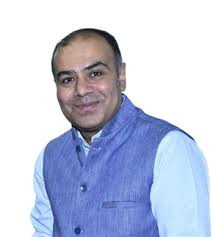
Bhavin Bhagat
Co-Founder & CEO, IndiaBizForSale & IBGrid · 13 Years in SME M&A · 1,000+ Deals Facilitated
Co-founded IndiaBizForSale in 2013 and IBGrid in 2016 – the two most active SME transaction platforms in India. Ex-President of TiE Ahmedabad and Executive Committee Member, AIC-LMCP Foundation. Spent 15+ years in pharmaceuticals across the UK and India before dedicating the last decade to SME investment banking. IBGrid targets M&A and fundraising closure in 120 days.