

What You’ll Get in This Guide;
- $4.9 trillion in global M&A deals in 2025 yet 70–90% still fail to deliver
- India’s M&A surged to $26 billion in just three quarters of 2025
- 75% of founders regret selling even when the money was right
- The 4-stage emotional arc every seller goes through and why most don’t see it coming
- The 8 most common reasons integrations fail and how to avoid each one
- A 100 Days playbook for acquirers to protect value from the moment the deal closes
- Real India case studies including Zomato-Blinkit, BYJU’s & Emirates NBD-RBL Bank
- Side-by-side comparison – exactly what winners do differently on both sides of the deal

First, For founders looking to actively pursue an M&A path, our comprehensive guide to mergers and acquisitions in India covers deal structuring, due diligence, and closing strategies.
Now, Let’s talked about those who closed the M&A deal at that last stage of deal sign.
The deal is signed. The wire transfer has landed. The champagne has been opened. For most people watching from the outside, this is the finish line.
For the two people at the center of every M&A transaction the one who sold and the one who bought — this is where the real journey begins. And for a surprising number of them, it is also where things start to go wrong.
In 2025, the global M&A market roared back. Bain & Company’s 2026 M&A Report estimates total global deal value reached approximately $4.9 trillion – up 40% from 2024, making it the second-highest year for deal activity on record. Yet the oldest problem in M&A remains unsolved: most of these deals will not deliver on what was promised. This guide is about that gap — and what both sellers and acquirers can do about it.
Whether you’ve just sold your business and are wondering what comes next, or you’re an acquirer now sitting across from a company you need to integrate, this is the honest, data-backed, practical guide you needed before the ink dried.
“2025 is on track to become the second-highest year in deal activity — up 40% in value to an estimated $4.9 trillion, and 7% in volume.” by Bain & Company, 2026 M&A Report – Looking Back at M&A in 2025
PART 1: THE STATE OF M&A IN 2026 – WHAT YOU’RE STEPPING INTO
The M&A Landscape: Where the Numbers Stand Today
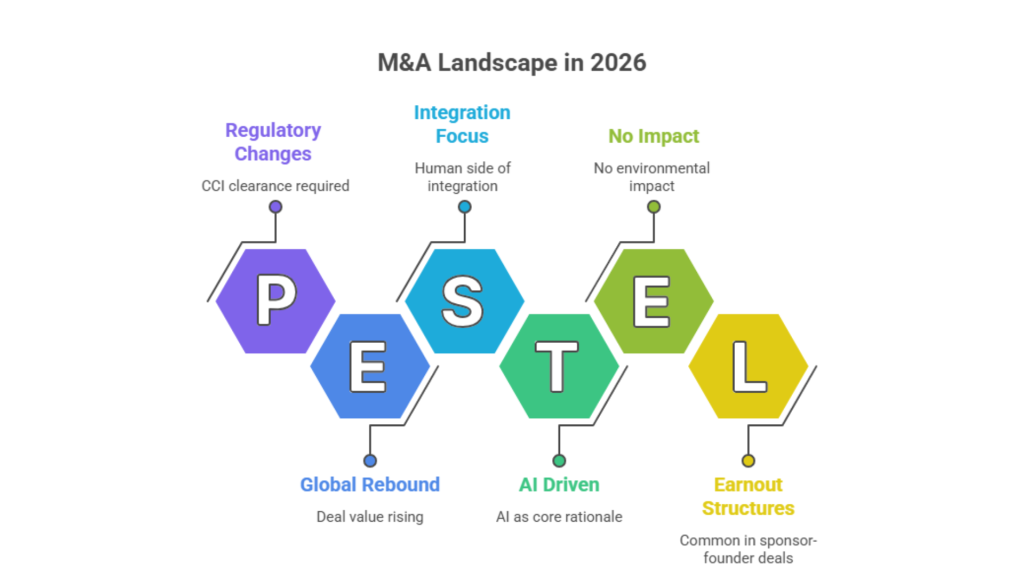
The rebound in M&A was global and broad-based. PwC’s 2026 Global M&A Outlook confirms deal value is rising even as volume stays selective — a K-shaped market where the largest, best-capitalized buyers are winning a disproportionate share of quality assets.
AI-related transactions powered the surge: almost half of strategic technology deal value for deals over $500 million cited AI as a core rationale in 2025.
In India, the picture is equally dynamic. EY’s Q3 2025 India M&A Report shows total M&A value surged 37% year-on-year to US$26 billion across the first three quarters of 2025 defying persistent global macro volatility.
Automotive led by deal value, anchored by Tata Motors’ US$4.45 billion Iveco acquisition; technology topped volumes with 119 deals. Meanwhile, Q1 2025 alone recorded 669 transactions worth US$29 billion, the highest quarterly volume since Q1 2022 according to Grant Thornton.
So M&A is not just active, it is accelerating in complexity, size, and cross-border ambition. Which makes getting post-deal right more consequential than ever.
$4.9T Estimated global M&A deal value in 2025, the second-highest year on record, up 40% from 2024. Bain & Company 2026 M&A Report
$26B India M&A deal value in Q1–Q3 2025, up 37% year-on-year despite global uncertainty. EY India M&A Report Q3 2025
669 M&A transactions in India in Q1 2025 alone worth US$29 billion, the highest quarterly volume since Q1 2022. Grant Thornton / India Briefing, May 2025
70–90% Despite the boom, this is still the failure rate for M&A deals to meet their original objectives. The human side of integration has not improved as fast as deal volumes. Source: Multiple 2025 industry studies compiled by NMS Consulting
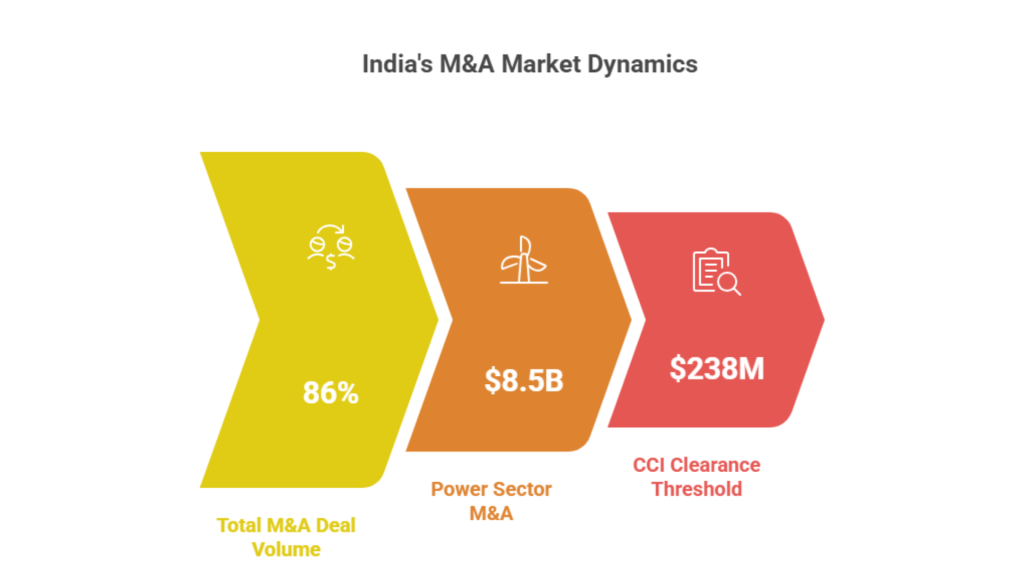
What changed in India’s regulatory environment matters too. The Competition Commission of India’s Combination Regulations 2024 introduced a Deal Value Threshol, transactions above INR 20 billion (US$238 million) now require CCI clearance if the target has significant Indian operations. Earnout structures and deferred consideration are now common in sponsor-founder deals.
As per Lexology’s March 2026 analysis of the Khaitan & Co M&A Masters webinar, the deals that will win in 2026 are those built on preparedness and disciplined integration, not speed alone.
PART 2: THE SELLER’S SIDE: YOU’VE JUST LET GO OF YOUR LIFE’S WORK
Life After Exit: The Truth Nobody Prepares You For
If you’ve spent five, ten, or twenty years building a business, you already know that it’s not just a business. It’s your schedule, your identity, your community, and in many cases, your purpose.
And then one day, it’s someone else’s.
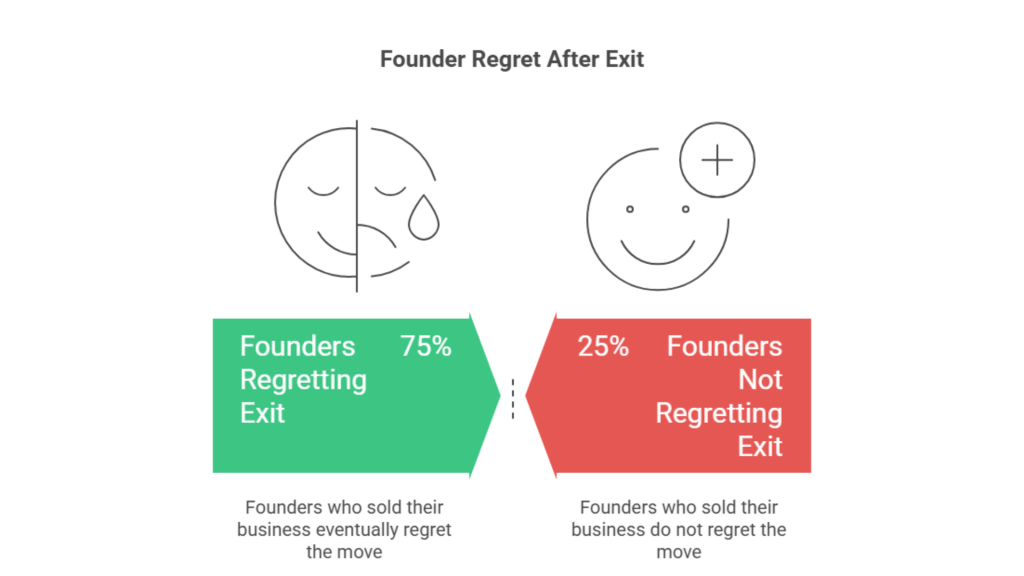
The data on what happens to founders post-exit is sobering. According to Jerome Myers, Founder of Exit to Excellence writing for the Entrepreneur & Innovation Exchange in May 2025, 75% of founders who’ve sold their business eventually regret the move.
Myers, who sold his own $20 million business, notes that the core issue is identity: when the deal closes, founders often ‘lose their identity and feel isolated.
Endeavor’s 2025 ‘Health and Performance of High-Impact Entrepreneurs’ Report which surveyed 118 tech founders out of which 70% of entrepreneurs feel lonely throughout their journey, and 62% feel they are sacrificing their present lives for future success. After the exit, that tension doesn’t disappear; it transforms.
This is not a weakness. This is what happens when something that held enormous meaning is suddenly absent.
75% of founders who sold their business eventually regret the move even when financially successful. Jerome Myers, Exit to Excellence / EIX.org, May 2025
70% of entrepreneurs feel lonely throughout their journey. Post-exit, this intensifies. Endeavor 2025 Health & Performance of Entrepreneurs Report
The Emotional Arc of an Exit
Clinicians and executive coaches who work with founders post-exit describe a recognizable arc. Dr. Kim Henderson, Head of Wealth Management Health & Wellness at Morgan Stanley describes it through the lens of grief: ‘During grief, you may experience denial, anger, bargaining, depression and ultimately acceptance.’
The same cycle that follows any major loss applies to selling a business often more intensely, because the loss is voluntary and the seller ‘should’ feel happy.
1. Anticipation & Euphoria
The period before and immediately after closing is marked by excitement and relief. Big plans are made. The danger here is making irreversible life decisions, new investments, new ventures – before the emotional dust has settled. Experienced advisors recommend waiting at least six months before acting on major decisions.
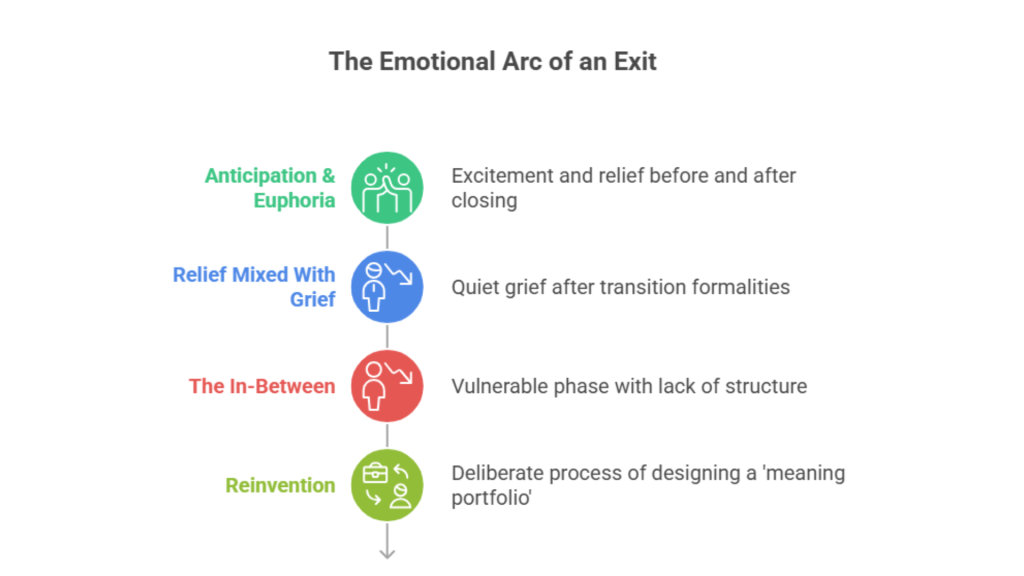
2. Relief Mixed With Grief
Once transition formalities are done, a quiet grief often arrives. The morning routine is gone. The inbox that once demanded attention is suddenly silent. Many sellers minimize this because they believe they ‘should’ be happy — which makes it harder to process.
3. The In-Between
The most vulnerable phase. Dr. Tricia Groff, writing in March 2025, describes it: ‘From both an emotional and lifestyle perspective, the time after selling a business can feel like no man’s land.’ Without structure or purpose, sellers rush into new ventures or make reactive financial decisions.
4. Reinvention
Founders who navigate the transition well describe a deliberate process of designing a ‘meaning portfolio’ — combining activities, relationships, causes, and projects that replace what the business once provided. This is not automatic. It is designed.
“When the deal closes, you often lose your identity and feel isolated. Most founders don’t see it coming.” said Jerome Myers, Founder of Exit to Excellence — EIX.org, May 2025
The India-Specific Reality
For Indian founders and promoters, the exit experience carries additional weight. In India, the founder and the business are often deeply intertwined, not just professionally, but socially.
Employees may have worked for you for decades. Vendors, customers, and community members have relationships with you personally, not the brand. Family members may be involved in day-to-day operations.
When a business sells, it isn’t just a transaction. The relational complexity is acknowledged even in regulatory discourse as Lexology’s 2026 review of Indian M&A notes, earnout structures and founder transition arrangements are becoming increasingly standard precisely because the human element of these exits cannot be cleanly severed at signing.
The Financial Transition: What to Do With What You’ve Earned
Capital solves liquidity. It does not automatically solve identity, structure, or meaning. These are separate problems that require separate solutions.
The combination of relief, emotional turbulence, and sudden access to significant capital is a dangerous mix. Poor sequencing of investment decisions is a documented pattern after liquidity events.
The Three-Bucket Liquidity System: A Practical Framework
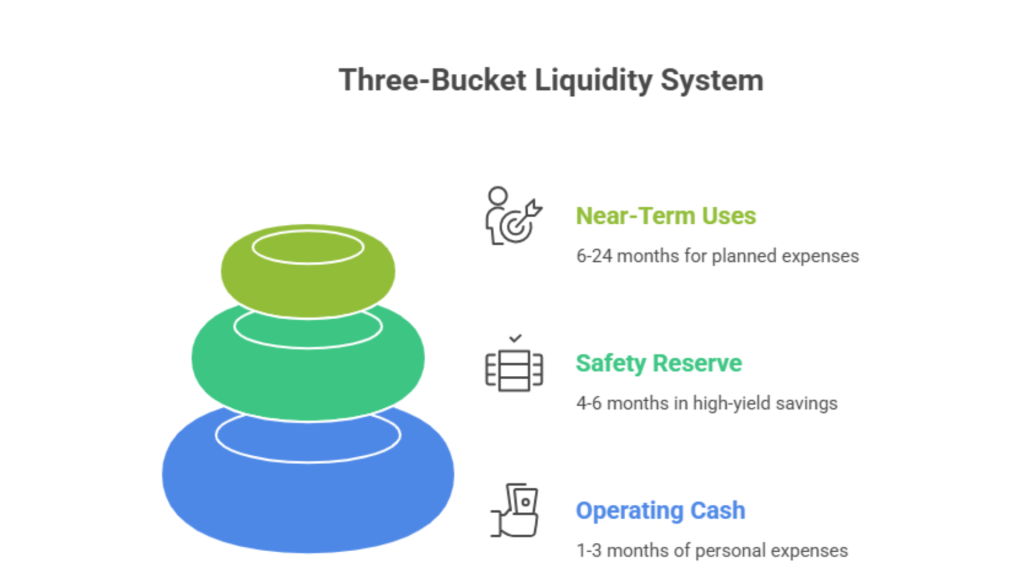
- Bucket 1 Operating Cash: 1-3 months of personal expenses in a liquid account. This is touched first.
- Bucket 2 Safety Reserve: 4-6 months in high-yield savings or money market. This is your stability buffer.
- Bucket 3 Near-Term Planned Uses: 6-24 months for taxes, planned investments, lifestyle transitions. Move deliberately.
Seasoned financial advisors recommend waiting a full 6 months before making any major investment decision post-exit.
India-specific note: the Competition Commission’s Combination Regulations 2024 and the evolution of loss carry-forward rules post-merger have changed the tax math for many sellers, particularly those in deals involving share transfers or structured earnouts. Engage a specialist before the deal closes and the regulations are still settling.
The Seller’s Practical Transition Checklist
Before the Deal Closes:
- Define your ‘Why After.’ Not why you’re selling but what you’re selling toward. A vague answer (‘freedom,’ ‘rest’) almost never sustains beyond six months.
- Negotiate your transition terms carefully. Earnout clauses, advisory roles, and non-competes all shape the quality of your post-close life.
- Get M&A-specific tax advice. India’s regulatory environment changed significantly in 2024–25 and will keep evolving.
- Build your support network now. Advisors, peers who’ve exited, a therapist or coach who specializes in entrepreneurial transitions.
In the First 90 Days Post-Close:
- Allow the grief. Founders who do best acknowledge the loss before building what’s next.
- Celebrate intentionally. Many sellers skip this entirely. Mark the milestone.
- Set a clean boundary with the business. If you agreed to a transition period, honor it but know where it ends.
- Wait at least six months before committing to your next major venture. Research and clinical consensus both support this.
- Begin sketching your ‘meaning portfolio.’ What does contribution, community, and stimulation look like for you now?
| Paths Many Sellers Choose | Traps Many Sellers Fall Into |
| Serial entrepreneurship starting again with new insight | Rushing into the next venture to escape the emotional void |
| Angel investing or mentoring founders | Making large investments from post-windfall emotional energy |
| Board roles and advisory positions | Staying ‘involved’ in the sold business and creating friction |
| Philanthropy and social impact work | Underestimating the transition expecting 3 months, needing 18 |
PART 3: THE ACQUIRER’S SIDE: THE DEAL WAS THE EASY PART
Post-Merger Integration: Why Most Acquirers Still Get It Wrong
Here is the honest question every acquirer should ask before the ink dries: Do we have a plan for Day 1 that goes beyond a press release and a welcome email?
The data has not improved. A 2025 analysis by NMS Consulting confirms that industry failure rates remain at 70-90%, ‘frequently due to weak integration.’
The same firms that cite synergy targets in their deal announcements routinely underinvest in the integration work that would realize those synergies.
What has changed in 2025: the nature of deals has shifted. Bain’s 2026 M&A Report notes that scope deals, acquisitions primarily aimed at revenue growth rather than cost-cutting accounted for 60% of big deals, the highest on record.
This means acquirers are buying capabilities, talent, and technology more than ever. Which makes the people side of integration even more critical.
The 8 Most Common Post-Merger Integration Failures
1. Cultural Misalignment:
Cultural incompatibility is responsible for 30% of failed M&A deals unchanged from previous years. What has changed: 60% of businesses now make a formal cultural assessment an essential part of due diligence, up from earlier periods. The AOL–Time Warner merger ($350B) remains the canonical cautionary example. In India, BYJU’S acquisition spree (2020–2022) is the local equivalent.
2. Talent Exodus
EY research shows average turnover of 47% in Year 1, 75% within three years. A 2025 M&A strategy guide notes that 30-50% of acquired company executives leave within the first year post-close, taking institutional knowledge, customer relationships, and technical expertise with them. The value walks out the door.
3. No Integration Plan Before Close
Top performing acquirers begin integration planning during due diligence, not after signing. Leading acquirers invest 6%+ of deal value on integration, raising success rates measurably. Companies that wait until after close are ‘often doomed to fail’, this finding has not changed across any study from 2024 or 2025.
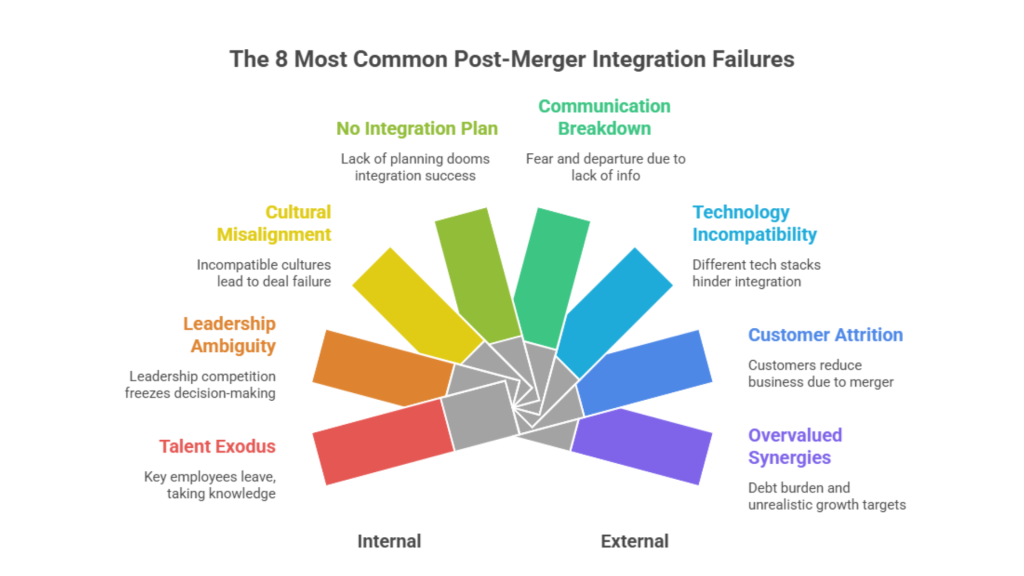
4. Communication Breakdown
When employees don’t know what’s changing, they fill the vacuum with fear and then departure notices. E2E Deal Insights (October 2025) documents that the best performers leave first because they can — they have the most options. Transparent, consistent communication from Day 1 is not optional.
5. Technology Incompatibility
Deals increasingly involve companies built on entirely different tech stacks. In 2025, with AI-native companies being acquired at record pace, the technology due diligence gap is wider than ever. IT integration planning must begin during the diligence phase, not in the first 90 days.
6. Leadership Ambiguity
When both leadership teams compete for authority, decision-making freezes. The longer the org structure remains undefined, the more expensive the uncertainty. The new org chart should be published within 30 days of close, this is a non-negotiable if talent retention is a priority.
7. Customer Attrition
PwC’s survey on customer behaviour during M&A found that 17% of customers actively reduce or stop business with a company that is going through a merger. Proactive, personal outreach to top accounts in Week 1 is non-negotiable.
8. Overvalued Synergies and Debt Burden
Scope deals built on revenue-growth theses are more complex to deliver than cost-synergy plays. Bain’s 2026 report warns that 2025’s surge included many first-time large-deal acquirers, companies that traditionally make few deals, which historically underperform experienced acquirers on integration.
The First 100 Days: An Acquirer’s Playbook
The first hundred days after close determine whether the deal creates or destroys value. Here is the framework used by high-success acquirers, validated across the 2025 M&A integration literature and India-specific PMI experience.
Day 1 :The Welcome Signal
The tone of Day 1 communicates everything. The CEO or integration lead should personally address all acquired employees, in person wherever possible. Be honest about what you know and what you don’t. Name the person to go to for questions. Do not underestimate this moment; employees remember Day 1 of an acquisition for years.
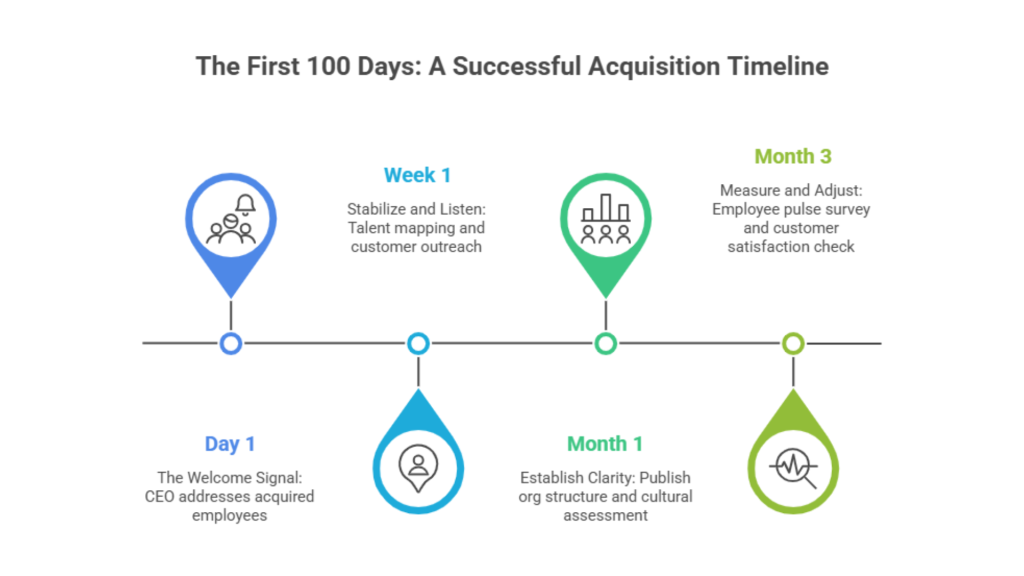
Week 1: Stabilize and Listen
- Begin talent mapping. Identify the 10-20 people whose departure would most damage the business. Start retention conversations immediately.
- Personally contact your top customers. Reassurance, not promotion. A mass email is not enough.
- Launch an IT inventory. AI-native or SaaS-heavy acquired companies require tech due diligence to continue post-close.
- Assign a dedicated integration lead, someone whose only job for the next 100 days is making this work.
Month 1: Establish Clarity
Publish the org structure. Ambiguity is the single most expensive thing you can allow to persist.
- Run a cultural assessment across both workforces. Survey, interview, and listen, 60% of successful acquirers now do this as standard practice.
- Launch a synergy scorecard. Track cost savings and revenue opportunities against the deal thesis every month.
- Align financial reporting. Harmonize accounting policies and set unified KPIs.
Month 3: Measure and Adjust
- Run an employee pulse survey. E2E Deal Insights recommends tracking ‘My manager does what they say they will do’ — a leading indicator of trust.
- Check customer satisfaction signals. Are renewal rates holding? Is support quality stable?
- Calibrate leadership. Make structural adjustments now, not in Month 12.
Retaining Talent: The Acquirer’s Most Urgent Battle
You did not acquire a company. You acquired the people who built it, maintained it, and know where all the bodies are buried. When those people leave, the acquisition thesis often leaves with them.
47% Average employee turnover in Year 1 post-merger, rising to 75% within 3 years. EY / MNA Community, 2025
30–50% of acquired company executives leave within the first year post-close, taking institutional knowledge and client trust with them. M&A Strategy Integration Guide 2025
30% of employees are deemed redundant when two businesses in the same industry merge, a stat that, when it leaks, accelerates voluntary departures among those not targeted. MNA Community PMI Challenges Report
Updated Retention Toolkit for Acquirers
- Cash retention bonuses: Structure vesting at 50% at 6 months, 50% at 18 months. Industry consensus from M&A Strategy Guide 2025 is 50–100% of base salary for critical roles.
- Career clarity: Show every key person their growth trajectory in the combined org. Ambiguity about future role = early departure.
- Manager trust: E2E Deal Insights (2025) identifies manager credibility as the #1 driver of post-M&A retention. New managers must be given onboarding that covers local norms, not just the org chart.
- Cultural celebration: Joint offsites, recognition of the acquired company’s wins, visible respect for their history — not erasure of it.
PART 4: THE INDIA CONTEXT: WHAT MAKES DOMESTIC M&A DIFFERENT IN 2025-26
M&A Integration Through an Indian Lens
India’s M&A market is not a smaller version of the global market. It has its own cultural textures, regulatory dynamics, and structural realities.
The Promoter Equation
In India, the promoter is often the business in a way that is simply not true in Western corporate structures. The founder’s relationships with banks, regulators, suppliers, and key customers are frequently personal, built over years and decades. A well-designed transition plan must include explicit relationship handovers, often with the founder actively present and endorsing the new ownership to key stakeholders.
Family Business Dynamics
A significant proportion of India’s mid-market M&A involves family-run businesses. Selling a family business is not just a financial event, it involves multi-generational expectations, employee loyalty spanning decades, and community identity. Acquirers who treat this as a standard corporate transaction often find unexpected friction with workforce, customers, and community.
What Changed in India’s Regulatory Environment in 2024–26
- Competition Commission of India Combination Regulations 2024: Deal Value Threshold of INR 20 billion (US$238M) — transactions above this now require CCI clearance if the target has significant Indian operations.
- Domestic M&A accounted for 86% of total M&A deal volume in H1 2025 indicating strong internal consolidation momentum. EY India H1 2025 M&A Report.
- Power sector led India M&A in H1 2025 with US$8.5 billion, renewable energy alone contributed 80% of that, up from US$3.2 billion in H1 2024. EY H1 2025.
- Earnout and deferred consideration structures became standard in sponsor-founder transactions through 2025 – Lexology / Khaitan & Co M&A Masters webinar, 2026.
- Outbound M&A by Indian companies is accelerating in 2025, driven by supply-chain diversification, ESG compliance needs, and access to tech and customers in Europe and North America. Tata Motors’ $4.45B Iveco acquisition is the flagship example.
India Case Studies: 2025–26 Lessons
Zomato + Blinkit: The Autonomy Model (Ongoing)
Zomato preserved Blinkit’s operational DNA, kept its leadership intact, and integrated gradually. Blinkit became the fastest-growing revenue engine for Zomato, validating the principle that acquired culture is an asset to be understood, not overwritten. Source: India Briefing 2026 M&A Analysis
BYJU’S Acquisition Spree: The Speed Trap
BYJU’S acquired WhiteHat Jr., Aakash, and others in rapid succession with inadequate integration planning. By 2024, WhiteHat Jr. was wound down and the broader group entered distress. The lesson: acquisition velocity without integration capacity destroys more value than it creates. Source: India Briefing 2026 M&A Analysis
Emirates NBD, RBL Bank: India’s Largest FDI Deal in Financial Services
The announced acquisition of RBL Bank by Emirates NBD in Q4 2025 is the largest foreign direct investment transaction in Indian financial services to date, a signal of India’s growing attractiveness for strategic inbound capital. Integration of a regulated Indian bank is a test case the industry will watch closely. Source: EY Q3 2025 India M&A Report
PART 5: WHAT SEPARATES SUCCESS FROM FAILURE
The Deals That Work vs. The Ones That Don’t
These patterns are drawn from 2025 research across Bain’s 2026 M&A Report, EY India H1 2025, E2E Deal Insights, and Lexology / Khaitan & Co (2026).
Acquirer Comparison
| Dimension | Deals That Succeed | Deals That Fail |
| Integration Planning | Begins during due diligence | Starts post-close – too late |
| Cultural Assessment | Formal assessment before signing (60% of top acquirers now do this) | Assumed, never verified |
| Org Structure | Announced within 30 days of close | Left ambiguous for months |
| Communication | Unified Day 1 message; weekly cadence | Inconsistent, reactive, rumour-prone |
| Talent Retention | Key hires identified & bonused pre-close | Layoffs or ambiguity in first 60 days |
| Customer Outreach | Top accounts personally contacted in Week 1 | Mass email, no follow-up |
| Integration Budget | Invests 6%+ of deal value on integration | Treats integration as a cost centre |
Seller Comparison
| Seller Behavior | Founders Who Thrive | Founders Who Struggle |
| Purpose Planning | Designed post-exit life before close | Assumed that freedom = fulfillment |
| Identity | Business was one chapter of a full life | Business was the entire identity |
| Emotional Prep | Worked with advisor/coach on transition | Suppressed the emotional complexity |
| Financial Decisions | Structured liquidity plan; deliberate pace | Rushed major investments post-windfall |
| Transition Boundary | Clean break defined; handover respected | Kept ‘checking in’; couldn’t let go |
| Timing of Next Move | Waited 6–12 months before major decisions | Started next venture within 90 days |
While M&A is exciting, it’s equally important to understand the common mistakes that kill M&A deals in India so you can avoid them at the negotiation stage.
CONCLUSION: THE DEAL IS THE BEGINNING
What Both Sides Share
In every M&A transaction, there are two parties and two journeys. The seller who built something meaningful and is now navigating the strange, disorienting experience of letting it go. And the acquirer who saw enough value in what was built to pay for it, and now has to honour that bet by making the combined whole worth more than the sum of its parts.
The data from 2025 is unambiguous. The M&A market is larger and more ambitious than ever. The failure rate has not improved. The gap between deal-making skill and integration skill remains the defining challenge of this era.
As Lexology’s March 2026 analysis puts it: ‘2026 will reward preparedness and realism. Buyers and sellers who are clear on strategy, realistic on value, thorough in diligence and integration planning, and proactive on regulatory issues will be better positioned than those who rely primarily on speed.’
1. For Sellers
Your financial outcome is one dimension of this transition. Plan deliberately for identity, purpose, and structure, before the deal closes, not after. The most satisfying post-exit lives are designed, not defaulted into.
2. For Acquirers
Post-merger integration is not an afterthought. It is the work that determines whether your acquisition creates value or destroys it. The first 100 days are not a settling-in period, they are the most consequential hundred days of the entire deal.
3. For Both
In India’s M&A ecosystem, with new regulatory frameworks, shifting deal structures, and a rapidly growing community of sophisticated buyers and sellers, being connected to the right platform and the right advisors at the right moment is not a luxury. It is a competitive advantage.
At IndiaBizForSale, we work with founders ready to write the next chapter, and acquirers ready to build something bigger than what they could alone. If you’re at either of those inflection points, we’d like to be part of that story.